
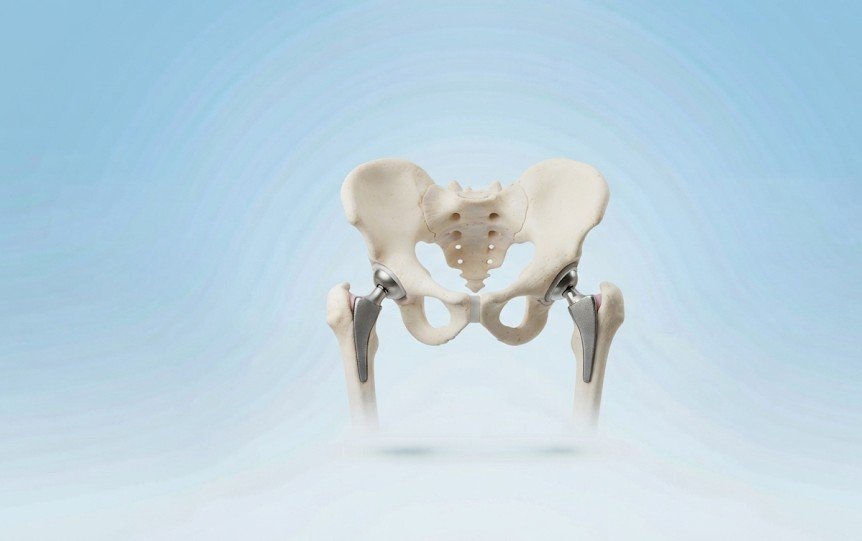
Bilateral Hip Replacement
Restoring Mobility and Comfort in Both Hips
Bilateral hip replacement is a surgical procedure that replaces worn or damaged hip joints on both sides with artificial prosthetic components. It is typically considered when bilateral hip damage causes ongoing pain, joint stiffness, or difficulty with walking and everyday movement.
At EthosMedi, our orthopedic team tailors treatment to each patient's overall health, bone quality, extent of joint degeneration, and mobility goals.
When Is Bilateral Hip Replacement Considered?
Orthopedic specialists may recommend bilateral hip replacement after conservative measures—such as medication, physical therapy, and activity adjustments—no longer provide sufficient relief. Common reasons include:
Severe Osteoarthritis: Advanced cartilage wear and joint degeneration affecting both hips.
Rheumatoid or Inflammatory Arthritis: Chronic joint inflammation causing progressive damage to the hip joints.
Avascular Necrosis: Reduced blood supply to the femoral head leading to bone weakening and joint collapse in both hips.
Advanced Joint Degeneration: Structural wear that limits range of motion and joint stability.
Persistent Pain and Stiffness: Ongoing hip discomfort that interferes with sleep, sitting, or standing.
Reduced Daily Mobility: Noticeable difficulty walking, climbing stairs, or carrying out routine tasks.
Personalized Surgical & Recovery Care
During bilateral hip replacement, damaged bone and cartilage surfaces in both hips are replaced with precision-engineered prosthetic components designed to restore smooth motion, alignment, and joint stability. Depending on the patient's health and clinical needs, surgical planning addresses each side safely and thoughtfully.
Post-operative care focuses on steady, guided recovery
Pain Management: Structured comfort measures to support early movement.
Guided Physiotherapy: Targeted exercises to rebuild strength, balance, and flexibility in both hips.
Gradual Mobility Progression: Step-by-step support for walking and returning to daily activities.
Regular Follow-Ups: Ongoing check-ins to monitor healing and long-term joint function.
With thorough evaluation, careful surgical planning, and coordinated rehabilitation at EthosMedi, patients can work toward lasting comfort, steadier movement, and an active daily life.